Bitter almonds cut through the heavy drift of roasted lamb and split figs. Cencio Ferlante does not roar; he gurgles, his skin a bruised grape purple against the white linen of the harvest table. One moment he is raising the first cask of the season, a king among his dusty vines, and the next he is a collapsing monument. Rosa watches from below the salt, the rasp of cicadas loud in the sudden, paralyzed silence of the courtyard. Around her, the Ferlante men shout, their hands dropping to waistbands as the spilled wine pools into dark, poisoned velvet.
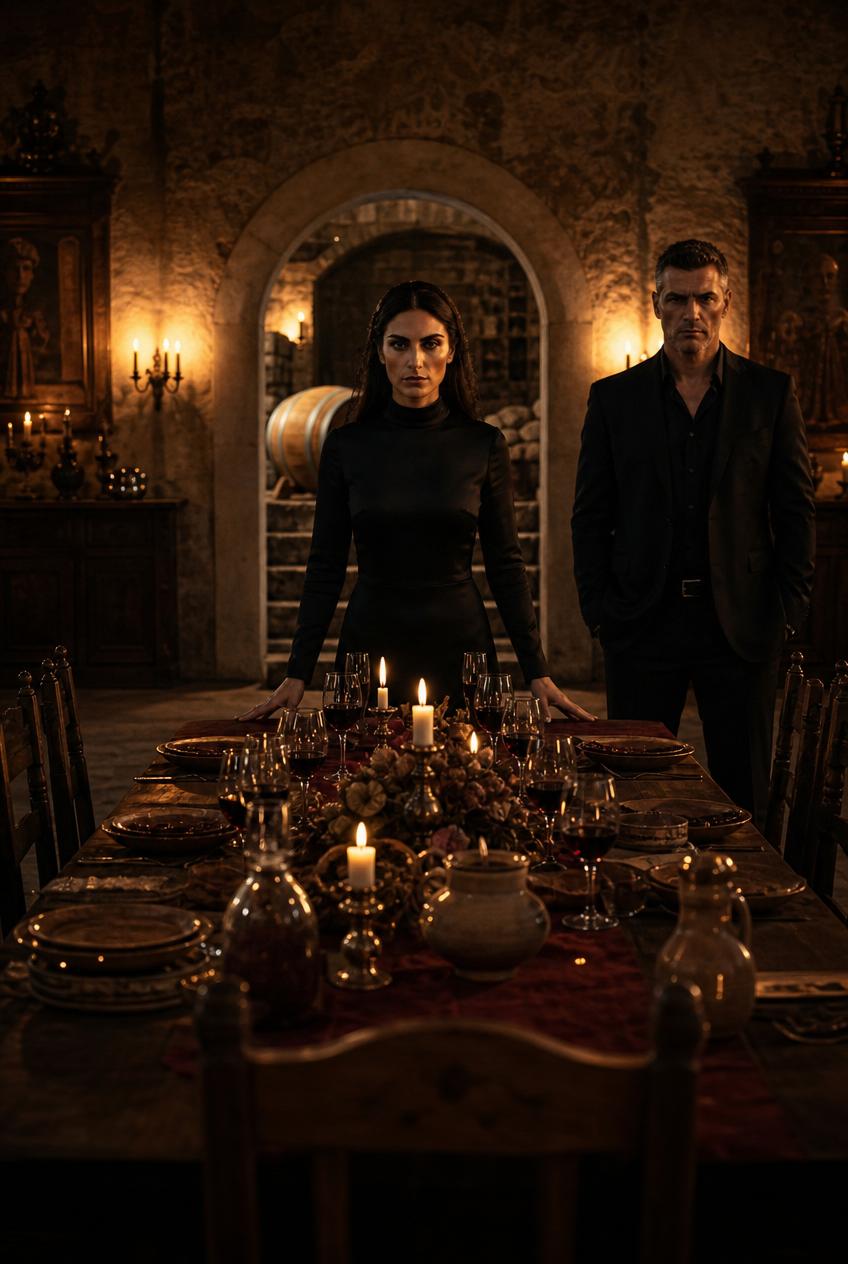
Outside the iron gates, a black sedan idles, its engine a low vibration in the dry Sicilian dusk. It is her husband’s car, sent by the Carrubbas to reclaim their asset before Ferlante grief curdles into a hunt for a scapegoat. Her brother Piero is already reaching for the heavy oak chair at the head of the table, his knuckles white, his eyes wet with a greed he lacks the wit to hide. Uncle Ezio stands behind him, a shadow whispering of priests and lawyers. Let them scramble. They expect her to run, to behave like the bargaining chip they bartered away twelve years ago. Rosa does not run. She retreats only long enough to swap festive silk for the heavy, heat-dampened black of mourning. Ignoring the waiting car, she walks back up the slope, past Vanni, the enforcer whose hand is frozen on his leather holster, and steps into the space her father left behind.
She pulls the heavy chair out and sits.