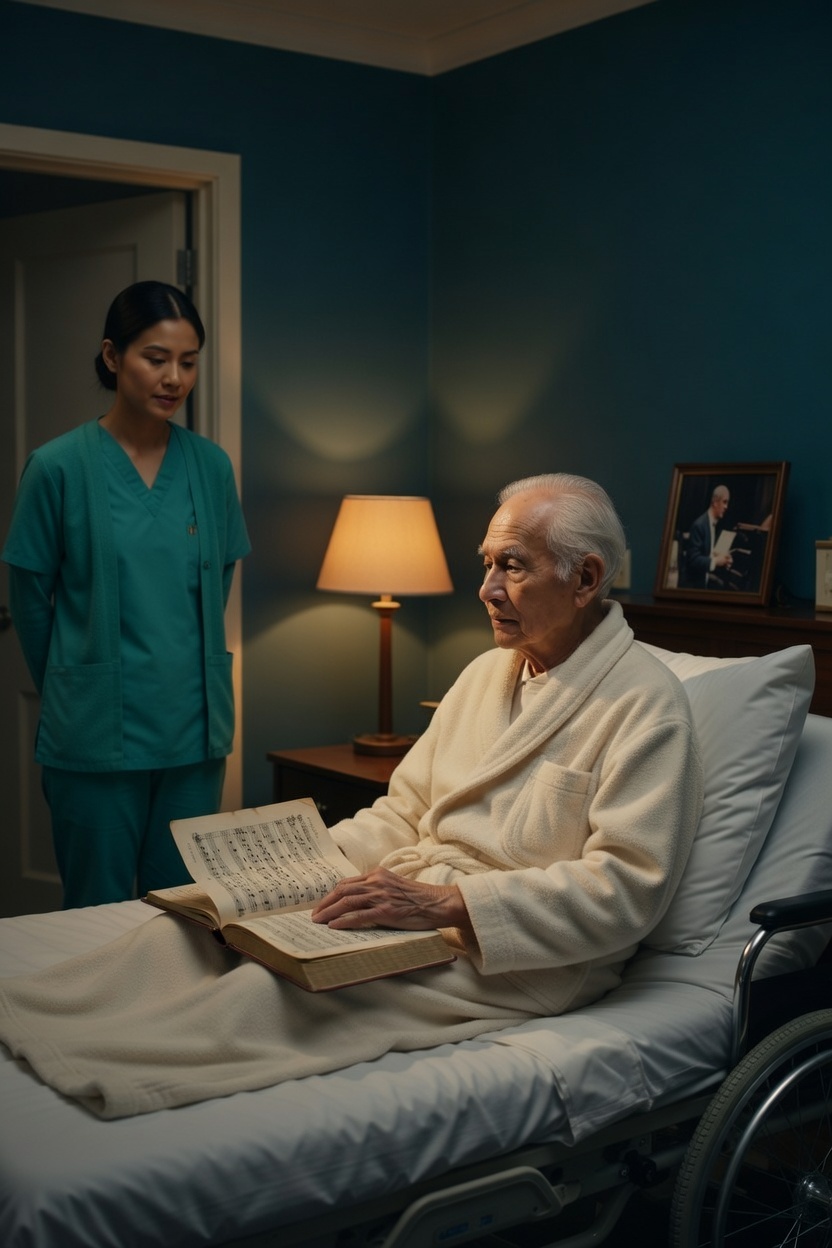
The air in Room 302 smells of antiseptic and the faint, metallic tang of an old man’s skin. It is 3 AM, the hour when the rest of St. Jude’s settles into a heavy, artificial sleep, leaving only the hum of the nurses' station and the rhythmic hiss of oxygen. Liwayway adjusts the bedside lamp, tilting the shade so the light pools over Mr Edmund Ardell’s hands. They are long-fingered and map-veined, resting like discarded marionettes atop the thin hospital sheet.
He has not spoken a word since he arrived three months ago. The chart calls it end-stage dementia with aphasia, a clinical way of saying the man is gone while the body remains. Yet, as Liwayway reaches for the worn leather bible on his nightstand to make space for his water, she notices a sliver of white protruding from the binding. It isn’t a bookmark. It is tucked deep into the gutter of the Psalms, hidden with the frantic precision of a man protecting his last remaining breath.
A sudden shift in the bed makes her freeze. Edmund is awake, his milky eyes fixed on the book in her hand with a clarity that shouldn’t be possible. He doesn't look like a patient; he looks like a sentry. His throat hitches, a dry, tectonic sound in the quiet room. Edmund's trembling hand reaches into the bible's spine, sliding out a folded piece of yellowed paper.