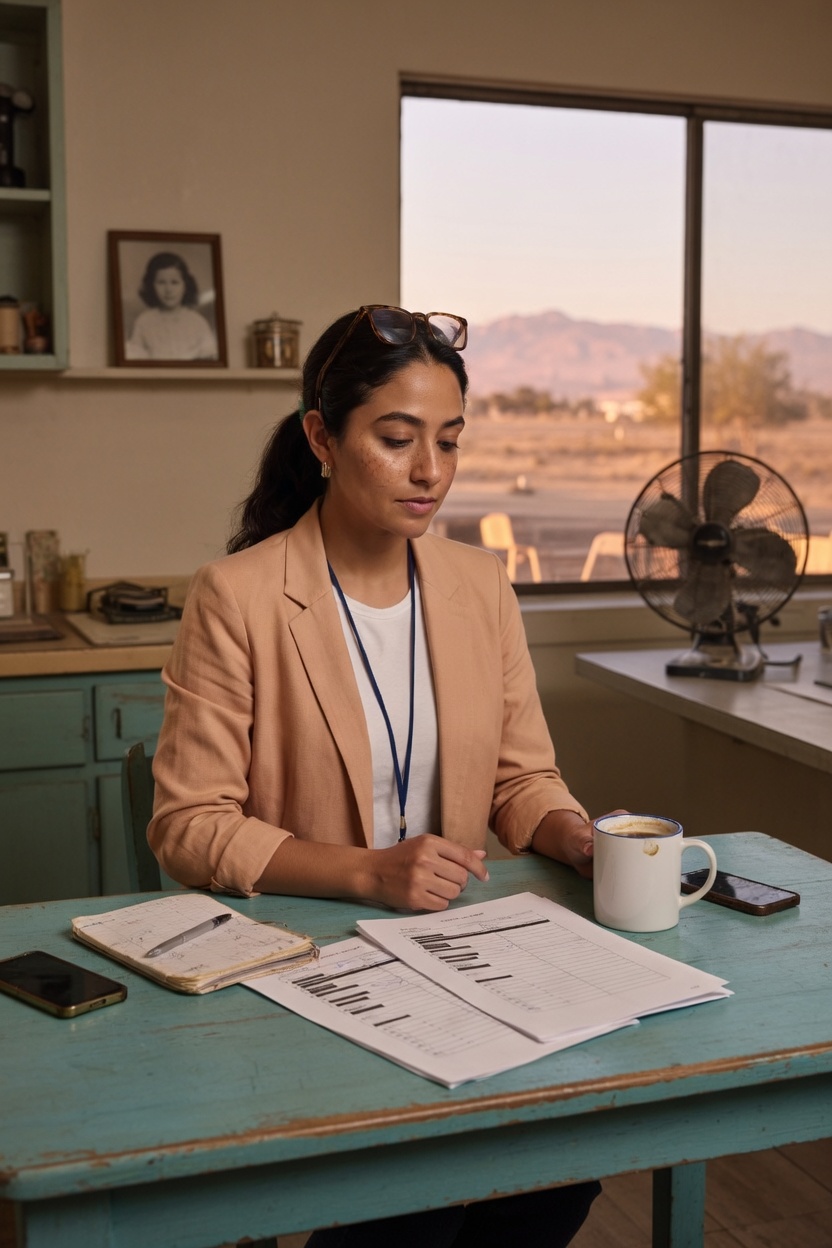
The battered black fan on the corner of the cubicle drags a blade of warm air across the desk, fluttering the corners of three weeks' worth of rejected public records requests. Sunlight rakes through the newsroom's vertical blinds in sharp, amber slats, catching the dust motes that dance above the keyboard. Dani Chavez adjusts her tortoiseshell reading glasses, her thumb tracing the small turquoise saint’s medal at her throat while she stares at the blinking cursor of a half-finished column.
A stack of mail lands on the desk with a dry, papery thud. Amidst the local flyers and internal memos lies a single, thin sheet from the state records office—a partial unsealing. Her breath catches as her eyes run down the list of names from the 1968 case. Most are buried under thick, ink-black redaction bars, but line nine remains untouched, the letters printed with clinical, typewriter precision. Estela Chavez.
It is her grandmother’s name. The woman who taught her how to dress for mass has been a silent record for fifty-eight years. The mail clerk's hand releases the heavy, sealed manila envelope, letting it drop through the air toward Dani's keyboard.