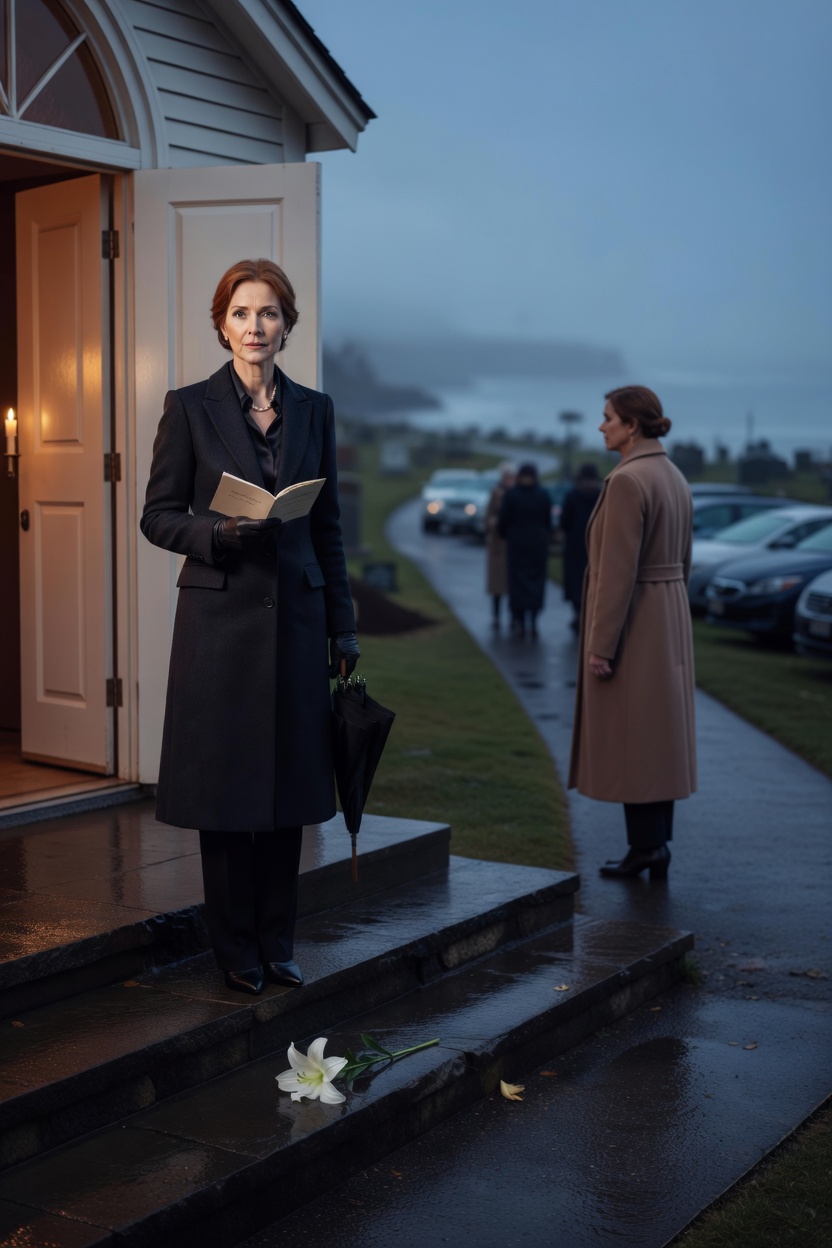
The Pyrex dish is heavy, lukewarm, and smells faintly of industrial cheddar. Margot sets it among the half-empty platters on the sideboard with the practiced precision of a woman who knows exactly how much space a tragedy should occupy. Outside the living room windows, the Portland rain turns the twilight into a smear of charcoal and grey, blurring the silhouettes of the final few mourners.
She is smoothing her wool skirt when the woman appears. This stranger is younger—mid-thirties—wearing a tan trench coat that lacks its third brass button. She does not reach for the coffee. Instead, she watches Margot with a terrifying, soft-eyed sympathy that makes the pearls at Margot's throat feel like a choke-chain. Margot waits for the standard condolences, the professional shield already raised, but the woman leans in closer than a stranger should.
"I’m sorry, Margot," the woman says, her voice barely a notch above the rain. "But did you know about the other family? In Salem?" The air in the room suddenly feels thin, like a vacuum has been pulled. Margot’s grey eyes lock onto the stranger’s face, searching for a crack in the cruelty. Joanne’s hand slides into the pocket of her damp trench coat and begins to withdraw a small, rectangular piece of cardstock.