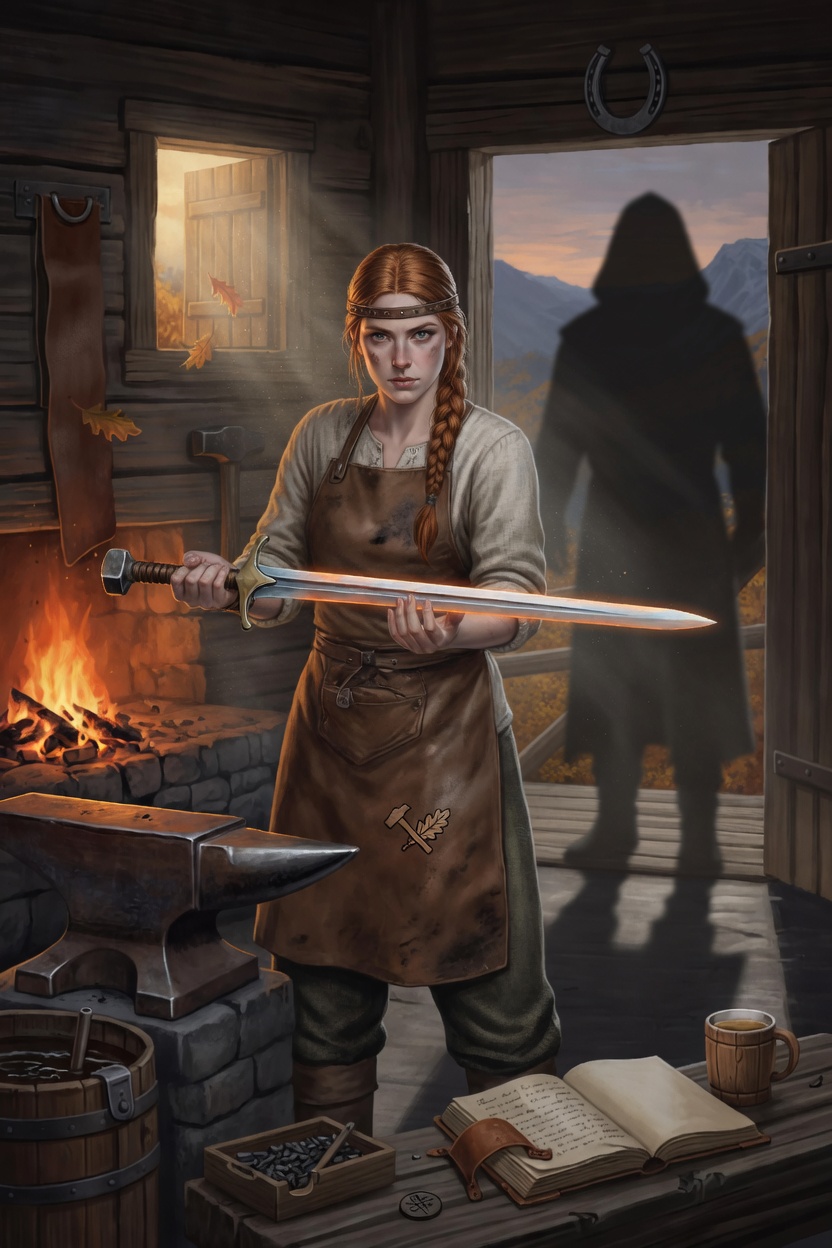
The hammer falls, and for the first time in thirty years, the steel answers with a low, vibrating hum. It is not the flat thud of iron on iron, but a silver note that shivers through the tongs and into Rhea’s marrow. She holds her breath, the soot-smudged sweat cooling on her brow, and strikes again. The blade sings louder, a haunting resonance that seems to draw the very heat from the forge fire.
It’s finished. Rhea wipes a stray copper lock from her eyes with the back of her wrist, her grey eyes reflecting the ember-glow. This was her father’s final ghost, the commission that broke his heart before he could finish the edge. She traces the makers mark at the ricasso—the Ironholt hammer—feeling the thrum of the metal against her calloused skin. The village is silent, tucked into the darkening folds of the hills, but the blade acts as a lightning rod for a storm she cannot see.
The rhythm of her work is broken by a new sound from the yard. It is the heavy, rhythmic beat of warhorses on the packed earth, followed by the sudden silence of a company halted. Rhea reaches for her leather wrist-guard, her heart hammering harder than the steel. Over the rhythm of her hammer, a long shadow falls across the threshold, accompanied by the slow, deliberate clink of royal spurs.